Danielle Blish
Of Fates & Fables (The Complete Series)Danielle Blish is a newly turned werewolf whose brief appearance carries the consequences of Brody Harrison’s violence far beyond the moment of an attack. Already changed and unable to return to her former life, she has lost her education, scholarship, and medical ambitions; yet she remains capable of recognizing the larger crime surrounding her and of choosing what kind of future might follow it. Her encounter with Romy Cartelli, Talia DuPont, and Anna Price turns private devastation into testimony about a systematic assault on women and the expansion of Brody’s pack.
Identity and Introduction
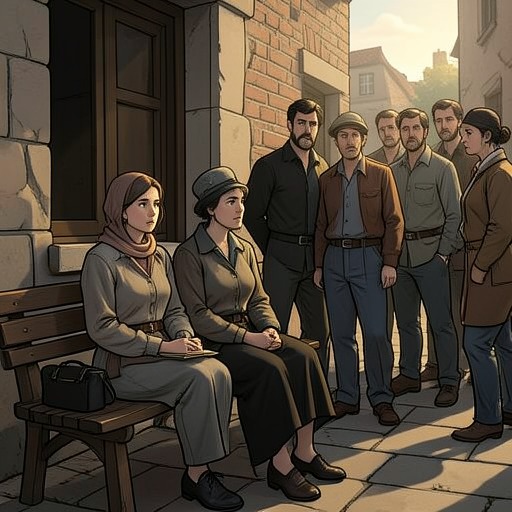
Danielle enters the story through Romy’s decision to seek information rather than wait passively for Brody Harrison to act. After receiving a threatening direct message from the account Bdog69x, Romy understands that Brody intends to retaliate against someone in her circle after Justice assists her escape. She proposes speaking to Danielle, and Anna identifies the woman by her full name, Danielle Blish. The choice is practical but also morally significant: Danielle is approached not merely as a victim to be protected, but as someone who may possess knowledge that can help locate other missing women.
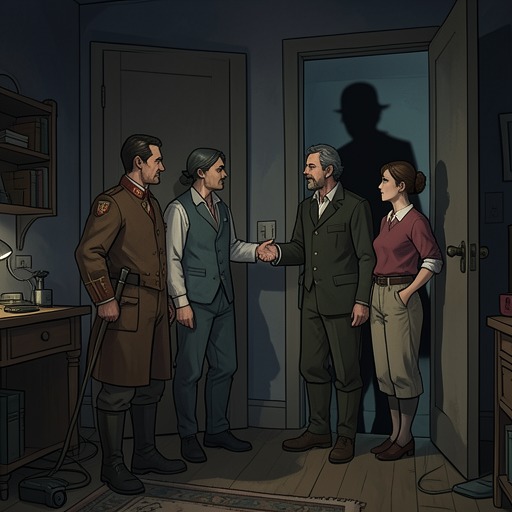
When Danielle opens the door of the small house described by Kash Montgomery, she appears exhausted rather than dangerous. Dark circles ring her eyes, her hair is unbrushed, and her condition suggests the strain of recent transformation and isolation. Romy notices with relief that Danielle is neither visibly dying nor attacking them with her teeth. That cautious observation captures the uncertainty surrounding newly turned werewolves: Danielle is still recognizable as the person Romy knew, but her body and circumstances have been violently altered.
Transformation and Personal Loss
Danielle explains that there is no reversal available to her. She is already changed, and the finality of that condition separates her from Romy’s earlier desire to become a werewolf by choice. For Danielle, transformation was not an empowering possibility or a romantic bond; it was an imposed rupture. Her new existence has made ordinary human institutions inaccessible. She had to drop out of school because she could not control her shift, her scholarship was withdrawn, and her goal of entering medical school was destroyed.
The loss is therefore material as well as emotional. Danielle is not simply grieving an abstract former identity: she has lost a course of study, financial support, professional direction, and the social future those things represented. Her statement that she is alive but that her life is gone forces Romy to reconsider her own fascination with transformation. Romy has been so focused on the possibility of becoming a werewolf that she had failed to imagine how another person might experience the same condition as catastrophe. Danielle becomes the living contrast through which the story distinguishes chosen transformation from coercion.
Testimony About Brody’s Operation
Danielle does not initially know where Brody Harrison keeps the other women, and she says that she spent little time with him. She remembers seeing Nick and Conner, however, and her recognition of Brody as their alpha allows Romy to clarify the chain of command. Brody is not merely adjacent to the violence: he gave the order that placed the other girls in danger. Danielle’s reaction changes when Romy connects him to the campus disappearances. She realizes that the missing girls are part of the same system that produced her own transformation.
Romy describes the operation in direct terms: Brody turns the women and then forces them to mate with male members of the pack so that they become pregnant with pack puppies. Danielle’s horror confirms the moral and political scale of the scheme. What first appears as a series of disappearances becomes population engineering, combining abduction, forced transformation, reproductive coercion, and territorial ambition. Danielle’s testimony also shows how perpetrators can conceal a coordinated structure behind isolated encounters; she had seen individual men, but only later understands the program binding their actions together.
Her information helps redirect the investigation toward the place where the remaining women are being held. Missy Quinn later infers that a room found empty was empty because Brody had moved the captives elsewhere, and the search ultimately reaches a group of pregnant women marked with tattoos matching Brody’s. Danielle’s account is thus part of the evidentiary bridge between a newly turned survivor and the discovery of the larger captive population.
Relationships and Chosen Community
Danielle’s relationship with Romy is grounded in recognition rather than uncomplicated reassurance. Romy approaches her with sympathy and asks what she can reveal, but Danielle’s condition also challenges Romy’s assumptions about the value of becoming a werewolf. The conversation leaves Romy more attentive to the difference between survival and restoration. Danielle cannot recover her old life simply because she has escaped immediate danger, and the people helping her must acknowledge that distinction.
Romy nevertheless offers Danielle a possible future within Kash Montgomery’s pack. She suggests that Danielle consider joining the pack and finding a new purpose there, even proposing that Birdie may welcome assistance in the pack’s medical work. The invitation does not erase Danielle’s lost ambition to become a human doctor, and Romy does not present it as a magical replacement for everything that was taken. Instead, it offers a form of chosen belonging and a practical role in which Danielle’s medical interests might still matter.
Danielle answers that she will think about it, leaving the decision open. That hesitation preserves her agency. The story does not convert her immediately into a grateful recruit or treat pack membership as an automatic cure. Her future remains unsettled, but the possibility of joining Kash Montgomery’s community contrasts with Brody Harrison’s model of forced affiliation, in which bodies are transformed, marked, and used without consent.
Narrative Role and Significance
Danielle gives the consequences of Brody Harrison’s breeding program a distinctly personal shape. The later rescue of the captive women reveals the same system at its most visible: the women are pregnant, frightened, and tattooed at the neck, while even a baby carries Brody’s mark on its skin. Danielle’s earlier account prepares the reader to understand those images not as isolated cruelty but as the physical expression of a deliberate program. Her own disrupted education shows what happens before the reproductive scheme is fully exposed: coercion continues after the bite, through the destruction of ordinary opportunity and the denial of self-determination.
Kaitlyn’s later insistence that her child was never the result of choice reinforces the principle Danielle embodies. Survival, gratitude, and attachment to a child do not cancel responsibility for the violence that created the situation. The rescued women can love their babies and still demand that Brody and his werewolves answer for what they did. Danielle’s experience belongs to the same moral structure: being alive does not mean being unharmed, and adaptation does not mean consent.
Danielle’s importance also lies in the way she expands the story’s conflict from a private struggle between Romy and Brody into a collective crisis. By the time Romy challenges the council and declares that the fight belongs to the pack, Danielle’s losses help establish why political delay is unacceptable. Her testimony, her ruined prospects, and her tentative openness to a new role all support the novel’s distinction between imposed identity and chosen family. Danielle is not defined only by what Brody did to her; she is also the witness whose knowledge helps expose his conspiracy and the survivor who may still determine what comes next.